Compatibility review
Mechanical match
Outline, active area, glass thickness, mounting points, bezel clearance and FPC route must fit the original assembly.
Obsolete & discontinued display engineering
Replace an obsolete or discontinued LCD by matching the complete mechanical, electrical and optical interface—not only the screen size or resolution.
Start with the original LCD. A part number, drawing, physical sample and clear front-and-rear photographs make the first compatibility review more reliable.Direct answer
An industrial LCD replacement project identifies the original display, documents every compatibility requirement, builds or selects a controlled sample, and validates that sample in the real equipment before production approval.
Read the complete replacement workflowCompatibility review
Outline, active area, glass thickness, mounting points, bezel clearance and FPC route must fit the original assembly.
Compatibility review
Interface, pin assignment, voltage, timing, driver behavior and connector orientation must be verified against the original display and PCB.
Compatibility review
Display mode, viewing direction, contrast, backlight, polarizer and temperature response must remain usable in the equipment.
Compatibility review
Approved materials, sample validation, change control and forecast planning reduce the risk of another unplanned discontinuation.
Existing replacement paths
These pages show current replacement examples and the evidence required before compatibility is confirmed.
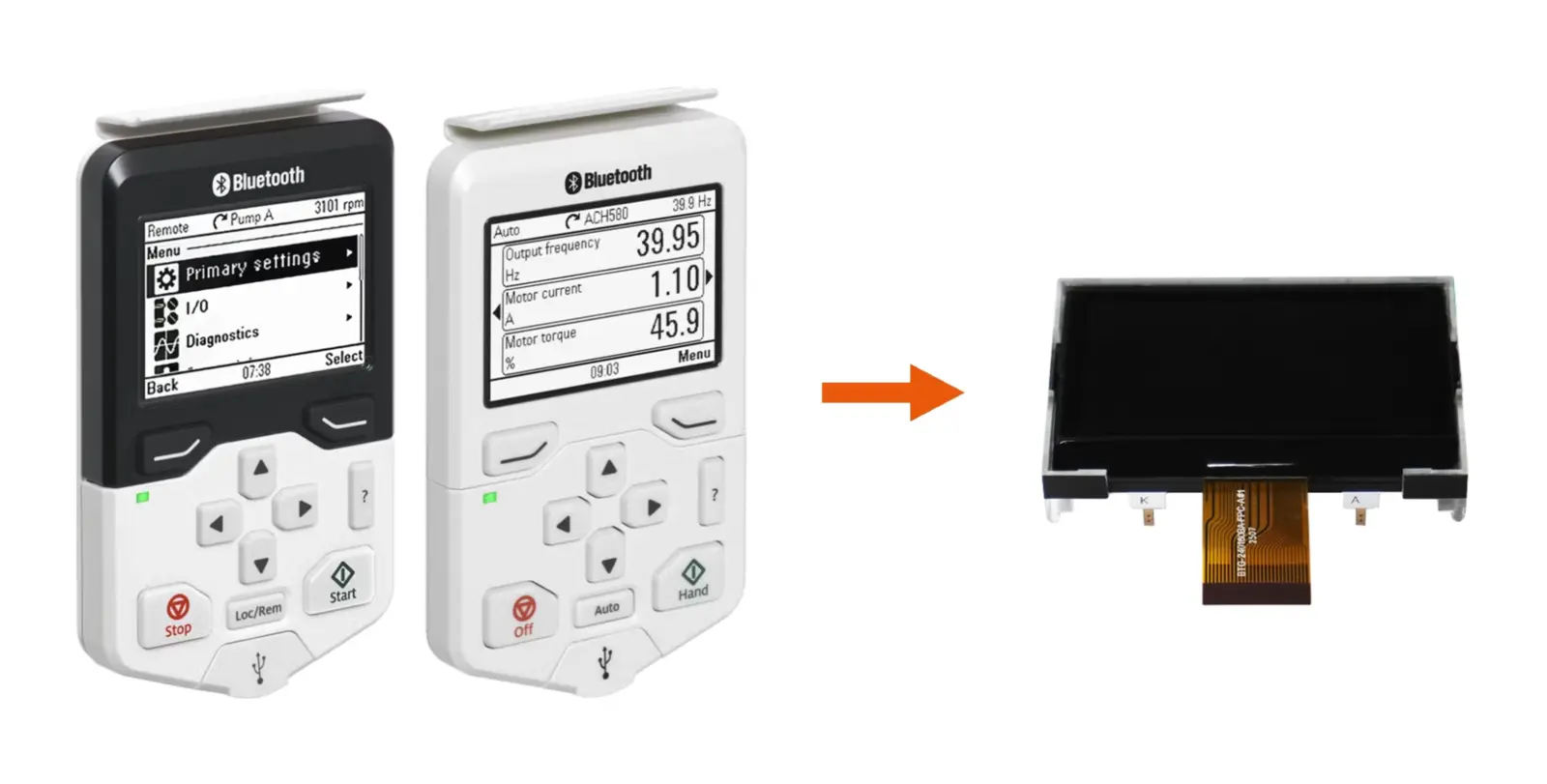
Review the 240 × 160 DFSTN COG replacement component, compatibility data and RFQ checklist.
Review ABB replacement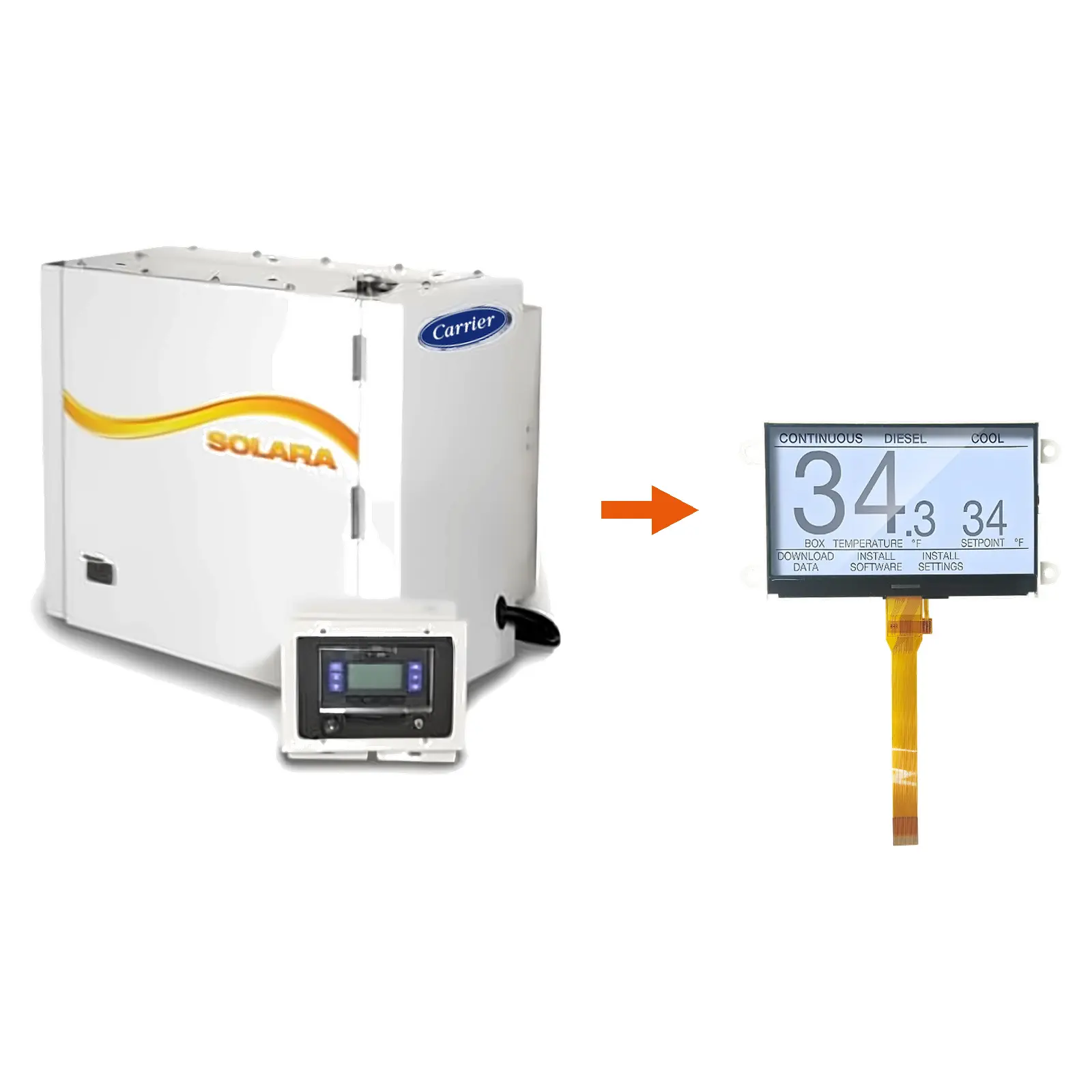
Review the compatible aftermarket display component and confirm the original panel revision before ordering.
Review Carrier APX displayReplacement engineering process
A documented process separates a technically compatible replacement from a panel that merely looks similar.
Collect the original part number, clear front-and-rear photographs, equipment model and any available drawing.
Build a mechanical, electrical and optical compatibility matrix instead of matching only size or resolution.
Produce or select an engineering sample and document any controlled difference from the original LCD.
Test the display in the real controller across power-up, temperature, viewing and operating conditions.
Approve the drawing, inspection points, materials and lifecycle plan before repeat production.
Replacement LCD guides
Use the identification and failure-diagnosis guides to prepare a more complete compatibility review.
Use a compatibility matrix across mechanical, electrical, optical and lifecycle requirements.
Read the guide Display identificationCollect the part number, dimensions, connector, interface and application evidence before the RFQ.
Read the guide Failure diagnosisSeparate panel, backlight, connector, power, temperature and environmental failures before replacement.
Read the guideRelated engineering paths
Start with the closest project type, then review the relevant products, technical guidance and RFQ requirements.
Replacement LCD RFQ
Include the old LCD part number, equipment model, photographs or sample, dimensions, connector, operating conditions and required quantity.
Replacement LCD FAQ
Final compatibility is confirmed against the original display and complete equipment.
Often, yes. A compatible or customized replacement LCD can be reviewed around the original outline, active area, interface, voltage, timing, connector, optical mode and operating environment. The final decision must be validated in the original equipment.
Send the old LCD part number, equipment model, clear front-and-rear photographs, physical sample when available, outline dimensions, connector and PCB details, operating voltage, temperature range, required quantity and any original drawing or specification.
No. Two displays with the same size and resolution can use different interfaces, pin assignments, timing, voltages, viewing directions, polarizers, FPC layouts and initialization requirements.
Yes. Existing pages show an ABB CP435-compatible aftermarket LCD component and a Carrier APX Controller 4 replacement LCD. The original panel revision must still be confirmed before ordering.
The customer validates engineering samples inside the complete equipment. The approved drawing, compatibility evidence, inspection criteria and controlled material plan then become the basis for repeat supply.